> For the complete documentation index, see [llms.txt](https://wiki.pandacoin.tech/llms.txt). Markdown versions of documentation pages are available by appending `.md` to page URLs; this page is available as [Markdown](https://wiki.pandacoin.tech/helping-the-wildlife/wildlifegoal/wildlife-donation/ocean-cleanup-project.md).
# Ocean Cleanup Project
## The Ocean Cleanup
{% hint style="success" %}
**Donation address (PND)**\
[`PSECCwBvFKCm9WtzDnWVfALgGSgbx2xHAf`](https://chainz.cryptoid.info/pnd/address.dws?PSECCwBvFKCm9WtzDnWVfALgGSgbx2xHAf.htm)
{% endhint %}
### Who they are
[**The Ocean Cleanup**](https://theoceancleanup.com/) is a Dutch non-profit engineering organisation, founded in **2013** by Boyan Slat when he was 18. Their mission is simple and enormous: **rid the world's oceans of plastic**. They approach it with hard engineering instead of slogans — building, deploying, and iterating actual hardware at sea and in rivers.
### How it works
#### Ocean garbage patches are vast and dispersed
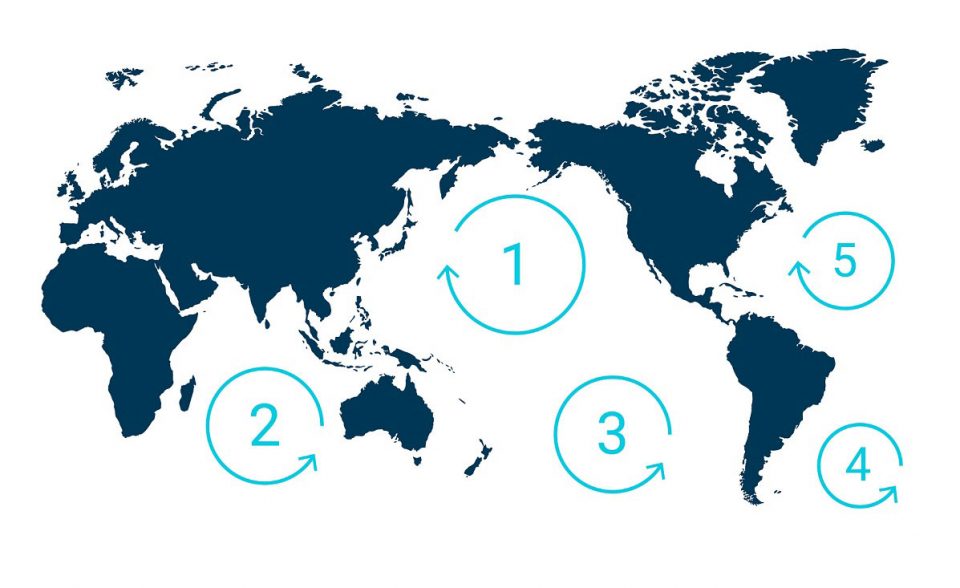
The five main ocean gyres where plastic accumulates.
Most ocean plastic isn't floating right where you can reach it — it's smeared across millions of square kilometres of open ocean, concentrated in five rotating gyres. The largest, the **Great Pacific Garbage Patch**, is roughly three times the size of France.
#### Take advantage of natural oceanic forces
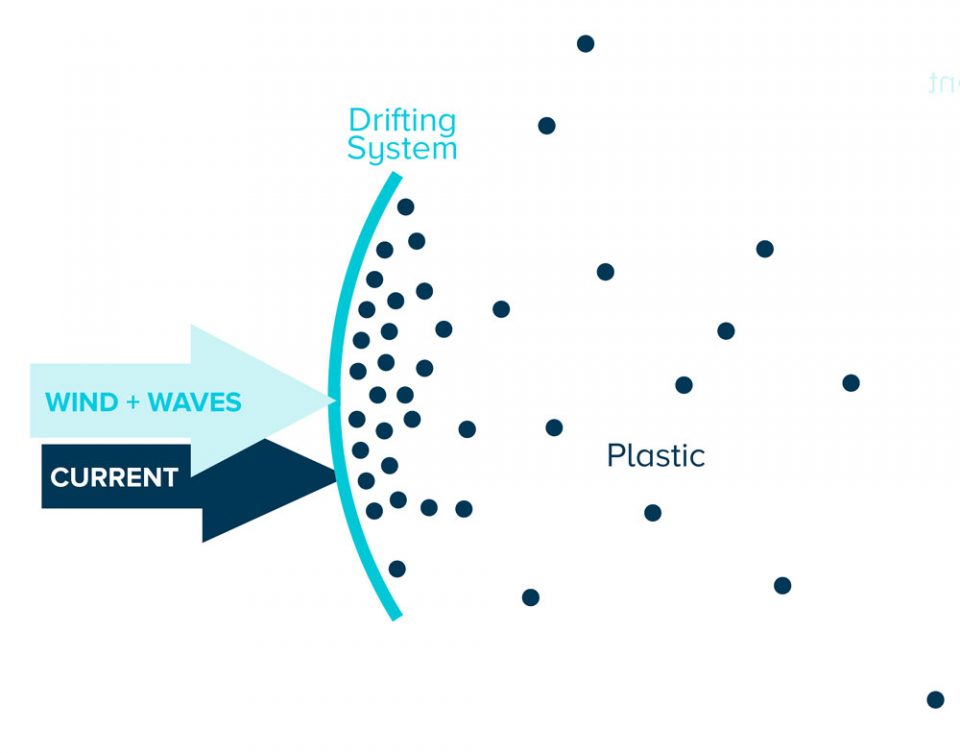
Instead of fighting the ocean, their systems use it. Long floating barriers, towed in a U-shape by two vessels, let wind and currents do the work of funnelling plastic into a retention zone for extraction — cheap on energy, gentle on marine life.
#### To catch the plastic, act like the plastic
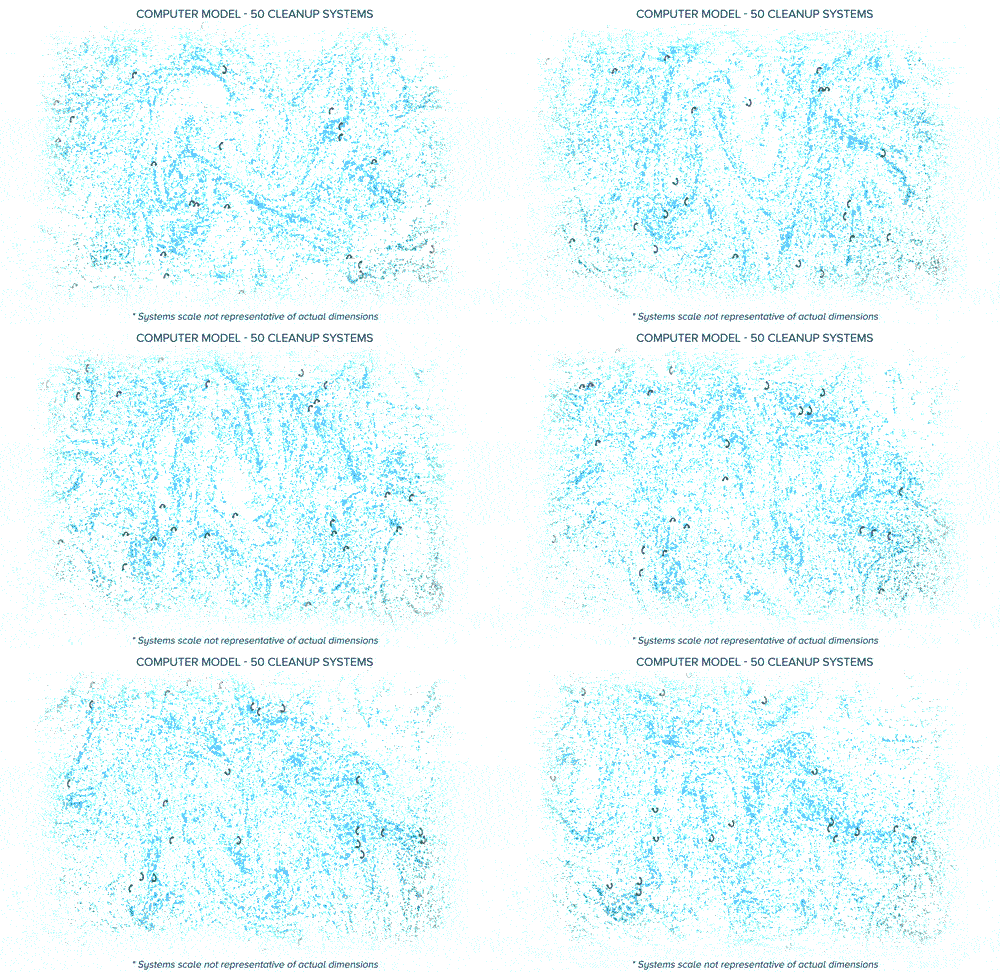
Their models predict that a fully scaled deployment can cut the Great Pacific Garbage Patch by **50% in five years**. More systems = more plastic pulled out.
#### Stopping plastic at the source: rivers
**Interceptors** — solar-powered river barges — catch plastic before it ever reaches the ocean. A handful of rivers carry the majority of the world's plastic into the sea, and Interceptors are now deployed across rivers in Indonesia, Malaysia, Vietnam, the Dominican Republic, the United States, Thailand, Jamaica, and Guatemala.
#### Extract, ship, recycle
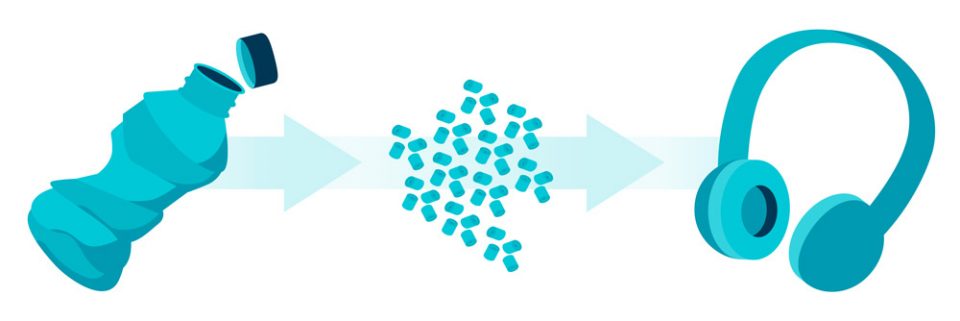
The plastic that comes back gets certified, processed, and turned into new products. Revenue from branded recycled-plastic goods feeds back into funding more cleanup — the goal is a self-sustaining system, not a perpetual donation cycle.
### Why it fits Pandacoin
Plastic pollution is one of the clearest "everyone loses" environmental problems on the planet, and The Ocean Cleanup is one of the rare efforts actually moving the needle with measurable results. Supporting them is supporting real-world impact at ocean-scale.
### Learn more
Visit [**theoceancleanup.com**](https://theoceancleanup.com/) for their current deployments, live dashboards, and transparency reports.
***
---
# Agent Instructions
This documentation is published with GitBook. GitBook is the documentation platform designed so that both humans and AI agents can read, navigate, and reason over technical content effectively. Learn more at gitbook.com.
## Querying This Documentation
If you need additional information that is not directly available in this page, you can query the documentation dynamically by asking a question.
Perform an HTTP GET request on the current page URL with the `ask` query parameter, and the optional `goal` query parameter:
```
GET https://wiki.pandacoin.tech/helping-the-wildlife/wildlifegoal/wildlife-donation/ocean-cleanup-project.md?ask=&goal=
```
`ask` is the immediate question: it should be specific, self-contained, and written in natural language.
`goal` is optional and describes the broader end goal you are ultimately trying to accomplish on behalf of the user. GitBook uses it to tailor the answer towards what is most useful for that goal.
The response will contain a direct answer to the question and relevant excerpts and sources from the documentation.
Use this mechanism when the answer is not explicitly present in the current page, you need clarification or additional context, or you want to retrieve related documentation sections.